| Most organisations face more rapid change than they
have ever had to contend with in the past. Whether change
is forced on you or is a logical consequence of your own initiative,
it is fraught with risk. For example: |
- Strategic planning cannot be effective unless it
takes due account of the risks of specific courses of action
and inaction and, indeed, the risks of moving from tried and
trusted ways of working into uncharted territory.
- Organisational
change is intimately bound up with people. Any change to the
ways people work and the interrelationships between their role
carries significant risks.
- Major projects have the power to make or break an organisation.
Unforeseen problems can have devastating implications in terms
of cash flow or business image.
Confronting the Risks
A sound risk assessment can make a significant, positive contribution
to any change initiative. As the risks increase with the
scale of the project, so too do the benefits to be gained by
assessing the risks before they take effect. Understanding the risks associated with change is obviously
crucial. No less important is the work of involving staff
and other stakeholders and winning their commitment to achieving
beneficial changes. |

TYPES OF RISK
Click on the image below for our illustrative analysis of common
project risks and their interrelationships


|
| Obviously there must be leadership in terms of what
is being proposed. But there must also be dialogue, giving all
interested parties a chance to air their concerns and to address
any uncertainties surrounding their respective roles. |

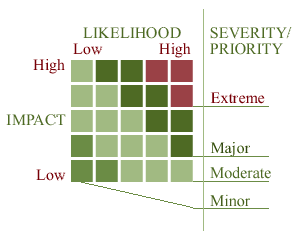
PROJECT RISK MANAGEMENT
Click on the image below for details of our approach to risk
management for major projects.
|
The relatively neutral
framework of a risk assessment gives you an opportunity to take
this dialogue a step further by focusing on problems rather than
personal issues, so that everyone becomes involved in tackling
the risks that stand in the way of beneficial change.
Cost-effectiveness is crucial too, ensuring good use of people's
time while maintaining their involvement and commitment.
In short, risk assessment provides a safe environment in which
to:
- raise very contentious issues;
- to pool knowledge about the current situation and where it
is likely to lead; and,
- to
agree on a way forward that has widespread support among stakeholders.


|

|


